Auckland Council to Replace Plan Change 78 – What It Means for Developers
With the Resource Management (Consenting and Other System Changes) Amendment Act 2025 now signed into law, Auckland Council is set to consider changes to the Auckland Unitary Plan on 21 August 2025 that is expected to result in the withdrawal of Plan Change 78.
These changes signal a major shift in how and where intensification will be enabled across the city. For developers and landowners, they represent both expanded opportunities in well-connected areas and tighter constraints in high-risk zones — marking the beginning of a new era in Auckland’s growth strategy.
A key driver behind the changes is a new direction set by central government, which requires Auckland Council to enable at least the same or greater housing capacity as Plan Change 78. It could lead to dramatic shift: from around 900,000 homes enabled under the current Auckland Unitary Plan to up to 2 million homes under the anticipated rules.
At the same time, the proposed zoning responds directly to the 2023 floods, which exposed the risks of poorly located housing. Stronger hazard protections are being introduced to prevent new development in Auckland’s most vulnerable areas, while focusing growth in safer, well-connected locations near transport and services.
For developers and landowners, this matters for three reasons.
First, the scale of the change creates significant new opportunities for density and higher-value use in well-located areas.
Second, stronger hazard protections will reshape the market by limiting development in high-risk flood zones while directing growth to safer, better-connected sites.
And finally, timing will be critical; with some projects better advanced under today’s rules, while others may benefit from waiting for the new framework.
What’s Changing?
The draft changes are designed to deliver on housing capacity requirements while reducing climate and flood risk.
Key proposals include:
- Replacing Plan Change 78 while retaining its focus on increasing housing near transport and town centres.
- Introducing stronger hazard protections to restrict new development in flood-prone or high-risk areas.
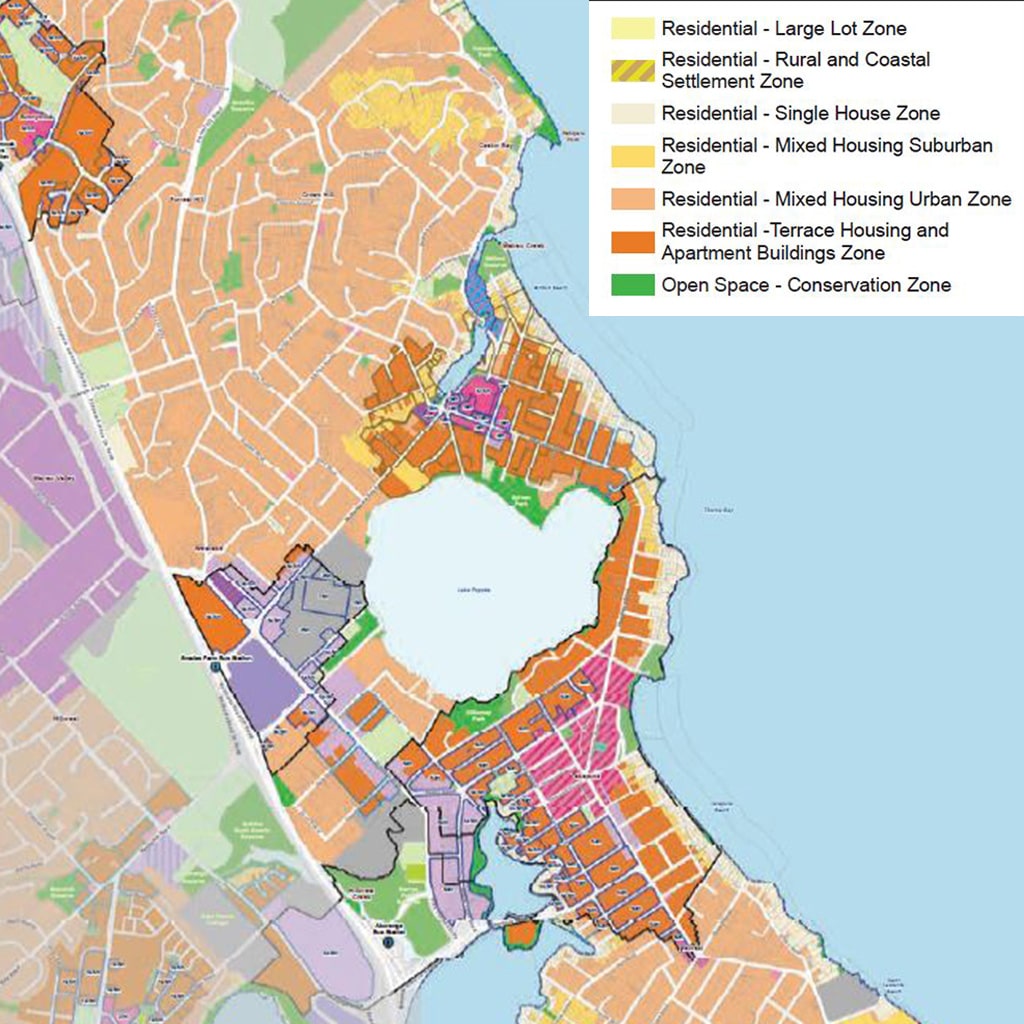
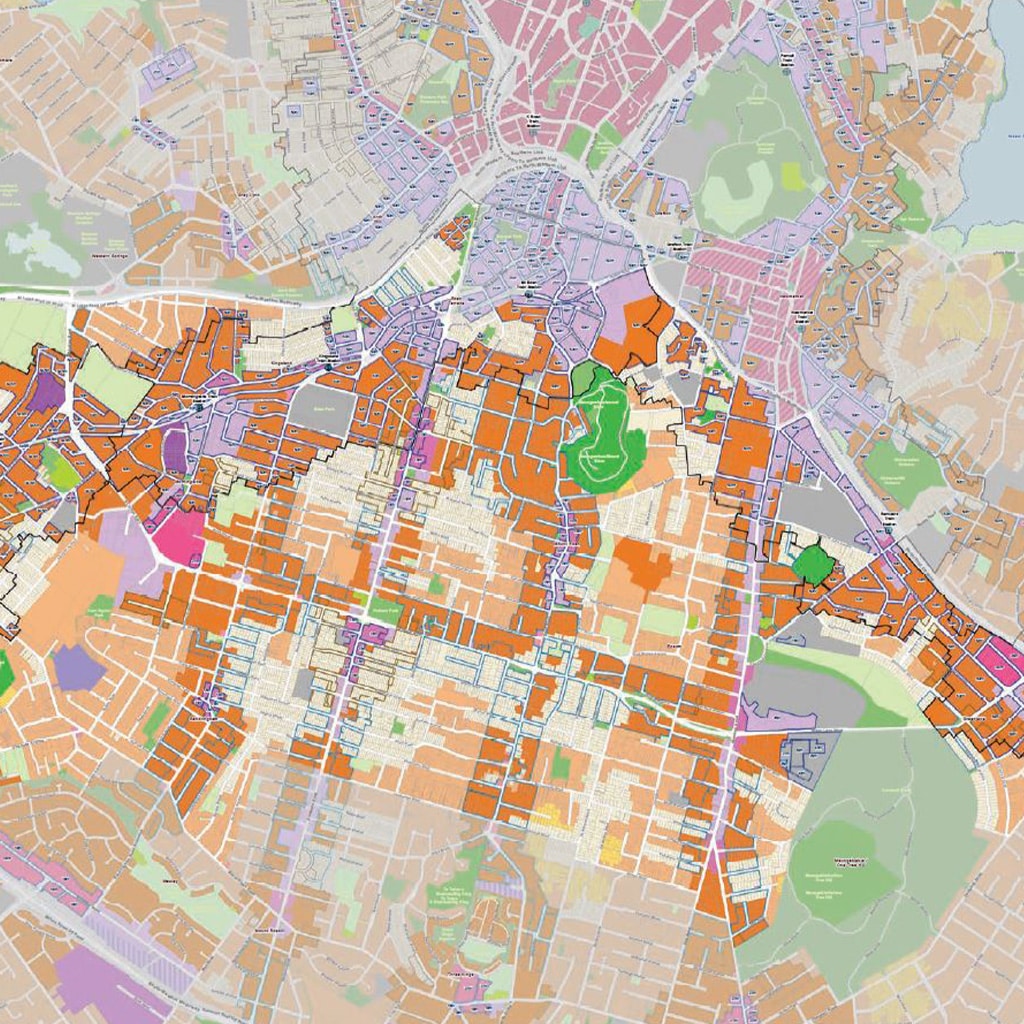
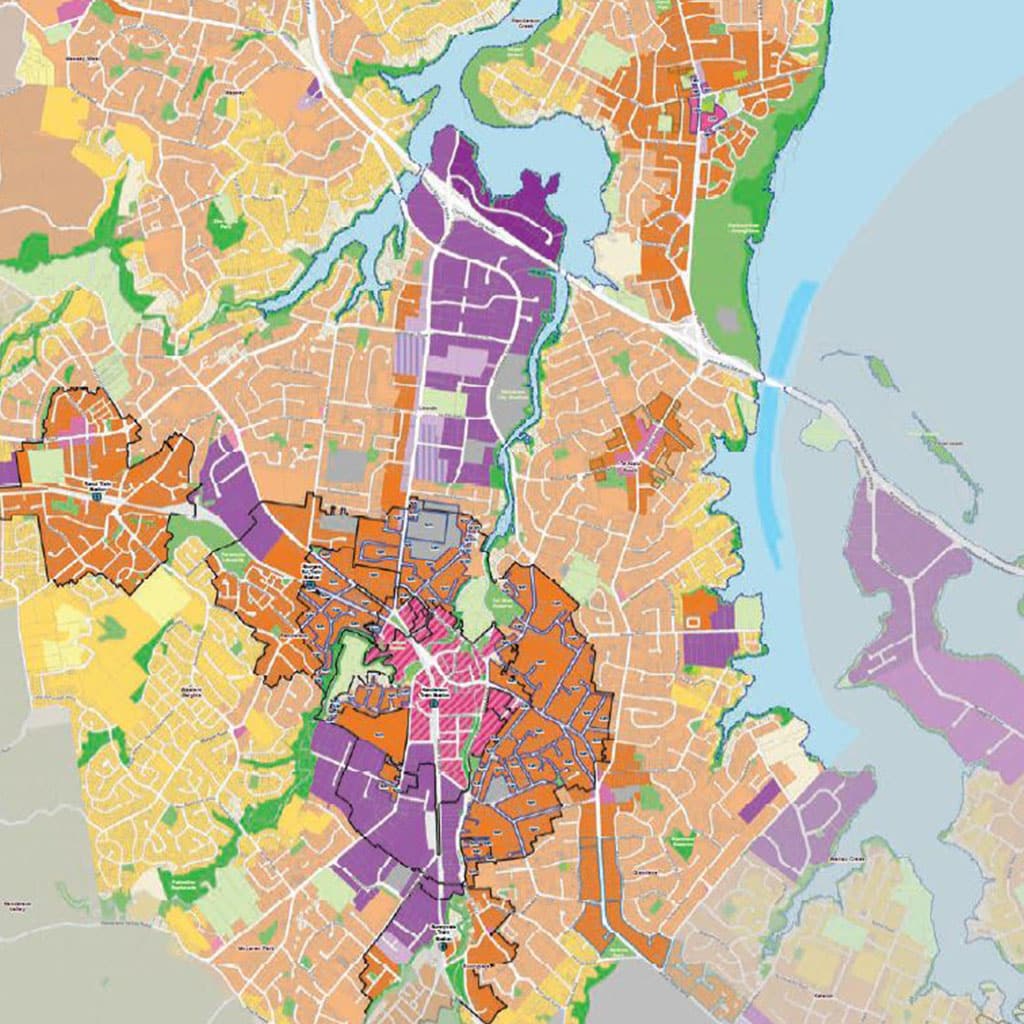
- Allowing more density in safer, well-connected areas, including 10–15 storey development opportunities near train stations, and more terrace housing/apartments within walking distance of centres and along 18 key frequent bus routes.
- A major increase in housing capacity, moving from around 900,000 homes under the current plan to up to 2 million homes enabled.
> Download Auckland Council’s draft zoning document: auckland-draft-zoning-maps-august-18
What Landowners & Developers Need to Consider
For developers, these proposed changes represent both new opportunities and new limitations.
High-risk land will face tighter restrictions, but areas close to major infrastructure investment, such as the City Rail Link and frequent bus routes — are being earmarked for greater intensification.
Bottom line is developers need to think strategically.
It’s important for developers not only to understand the opportunities these draft changes could bring, but also to consider what is still possible under the current rules. There may be projects where it makes sense to move now under existing provisions, while for others, it will be about preparing for what’s coming. Either way, timing and strategy will be key.
Our planning team at Cato Bolam is here to help landowners and developers make sense of these evolving rules. We can assess the development potential of your site, explain what’s possible today, and guide you on how to position for tomorrow’s opportunities.
What Happens Next?
The draft changes will be considered by Council’s Policy and Planning Committee on 21 August 2025. If progressed, they will go through consultation before being finalised. The PC78 replacement Plan Change introducing the new zones are likely to be notified by 10 October 2025 to comply with central government’s requirements.
In the meantime, developers need to keep a close eye on:
- The current Medium Density Residential Standards (MDRS) framework, which still enables significant housing capacity citywide.
- The proposed draft changes, which are likely to redefine where medium and higher-density housing will be most viable in the future.
- Find out more: Read Auckland Council’s recent update
How Cato Bolam Can Help
At Cato Bolam, our integrated planning and development team can help you make sense of these changes. We can assess how the draft rules may affect your site and identify opportunities for density under both current and proposed provisions. Our planners also guide you through hazard restrictions and infrastructure considerations, helping you build a development strategy that makes sense in a shifting regulatory environment.
To discuss how these changes could impact your land or project, contact Kaaren Joubert and our planning experts today.